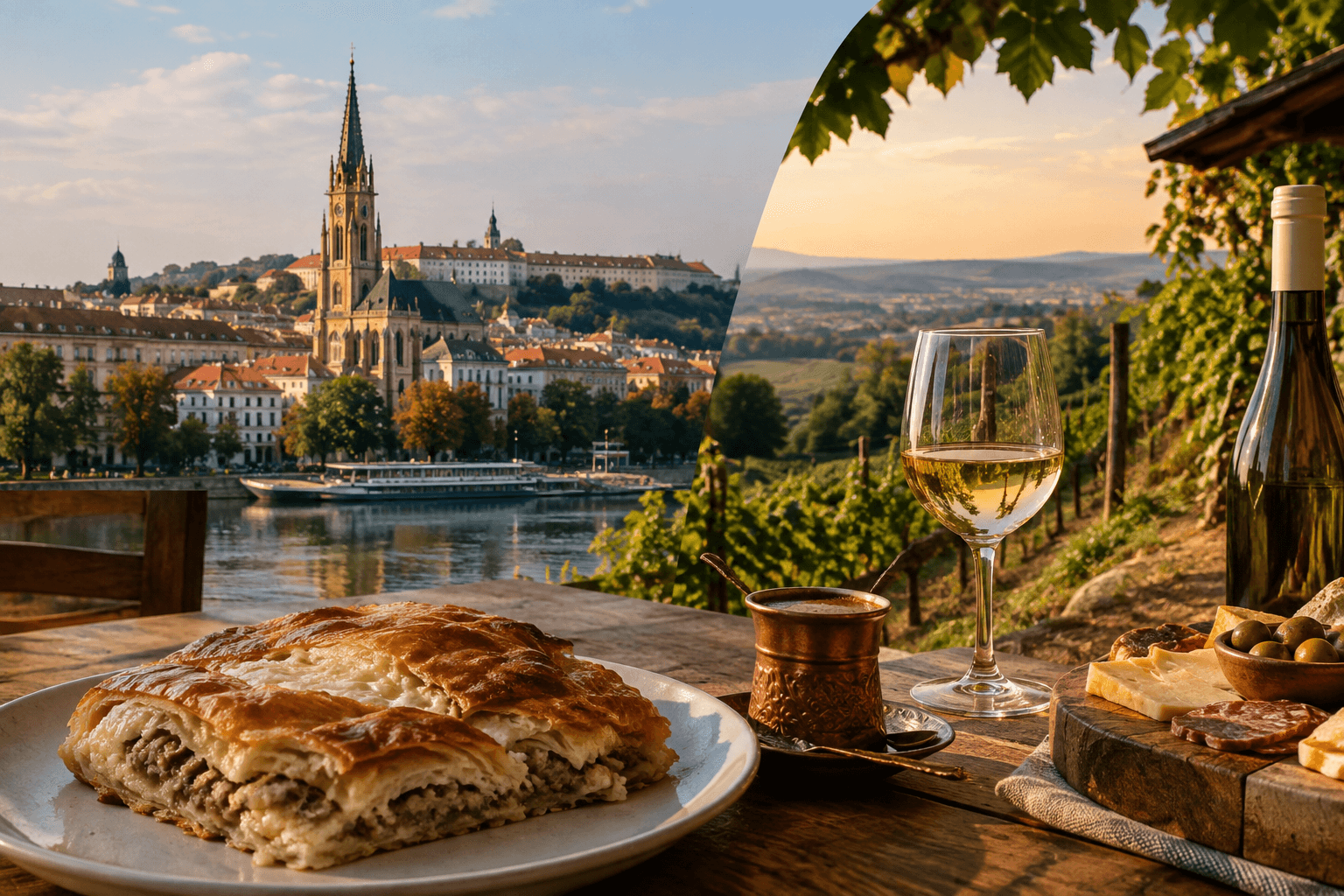
What a kafana is, and how to order in one
The traditional tavern explained: the menu logic, the etiquette, and what to do when the music starts.
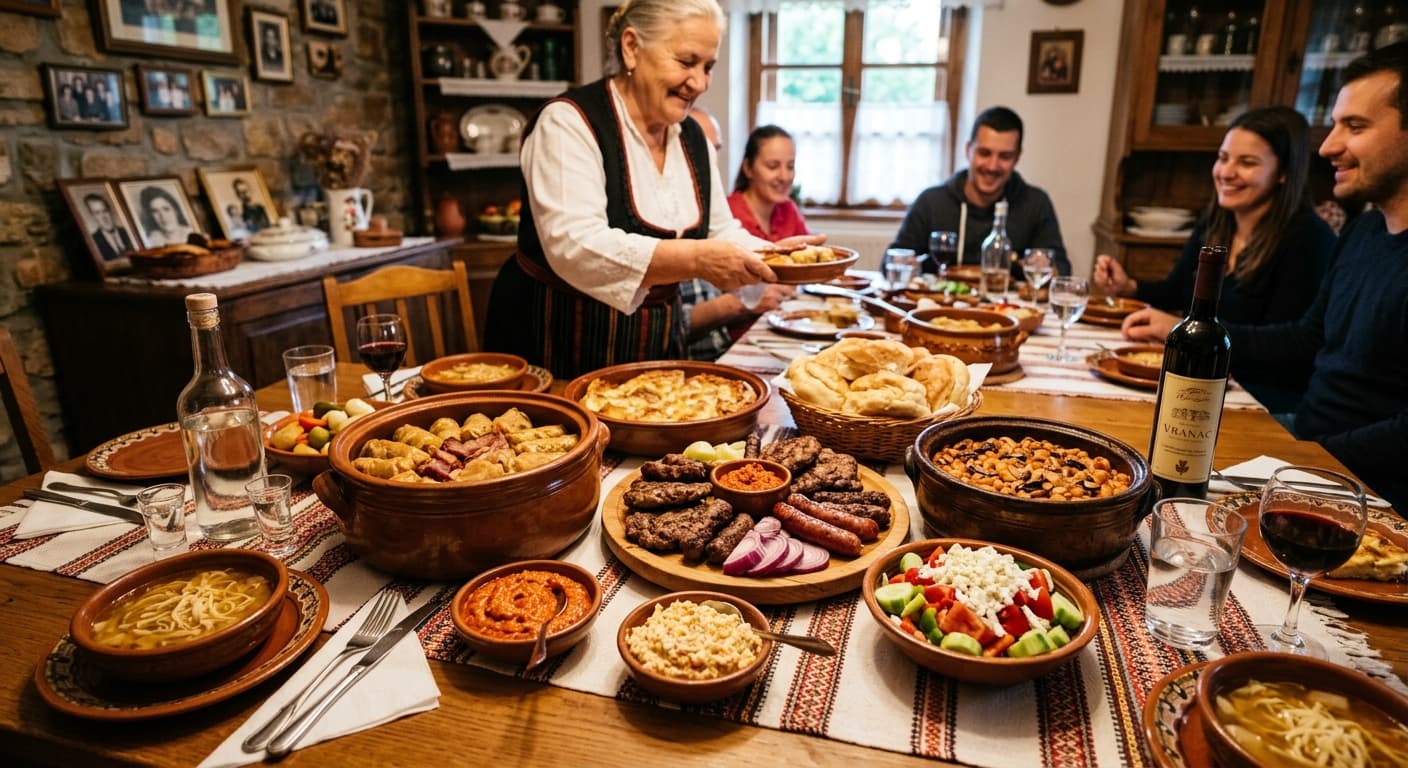
A kafana is the Serbian tavern: part restaurant, part living room for the neighbourhood, sometimes with live music. The word comes from coffee, but most kafanas are about long meals, grilled meat and rakija. If you eat out more than twice in Belgrade, one of those meals will be in a kafana.
What to expect when you walk in
Tables are close together, the menu is long, and nobody hurries you. In the older places the waiters wear white shirts and have worked there for years. You seat yourself unless someone comes to you first. Smoking rules have changed, but the older kafanas still feel like places built for talking.
How the menu works
Serbian menus follow the order of the meal, and ordering in that order is the easiest way to get it right.
- Rakija to start. Fruit brandy, usually plum (šljivovica), quince (dunjevača) or apricot (kajsijevača). A small glass is normal before food, not after.
- *Cold starters (hladna predjela).* Kajmak (a soft, salty clotted cream), ajvar (roasted pepper relish), cheese, cured meats. Order one plate for the table.
- Salads. Šopska salad (tomato, cucumber, onion, grated white cheese) arrives at the same time as the starters, not after.
- *Warm dishes and grill (roštilj).* Ćevapi, pljeskavica, sausages, pork neck. Portions are large; two main dishes for three people is often enough.
- Bread. Usually brought without asking and added to the bill.
Vegetarian guests will do well with starters, grilled vegetables, prebranac (baked beans) and pies. Tell the waiter early; kitchens are used to it.
Etiquette in five lines
- Say dobar dan when you come in and hvala when something arrives.
- Toasts are made looking the other person in the eye: živeli.
- Sharing plates is normal; ordering one starter each is not.
- Ask for the bill (račun, molim) when you are ready; it will not come on its own.
- A tip of around ten percent is customary for good service; round up for drinks.
When the music starts
Some kafanas have a small band, tamburaši or a trio with an accordion, in the evening. They move between tables and play songs on request. You are not obliged to request anything. If you do, it is polite to give the musicians a note; guests often tuck it into the instrument or hand it to the lead player. If you would rather they moved on, a smile and a small shake of the head is enough.
Where we take guests
On our Belgrade tours we stop where the food and the room are both worth it, and where the staff are used to answering questions. If you have a dietary requirement, put it in the booking notes and we choose accordingly.